Why Do I Feel Empty Inside? What It Means and a Way Back
Why do I feel empty inside? The hollow is a feeling too, often sitting on top of others you learned not to feel. What it means, and a quiet way to meet it.


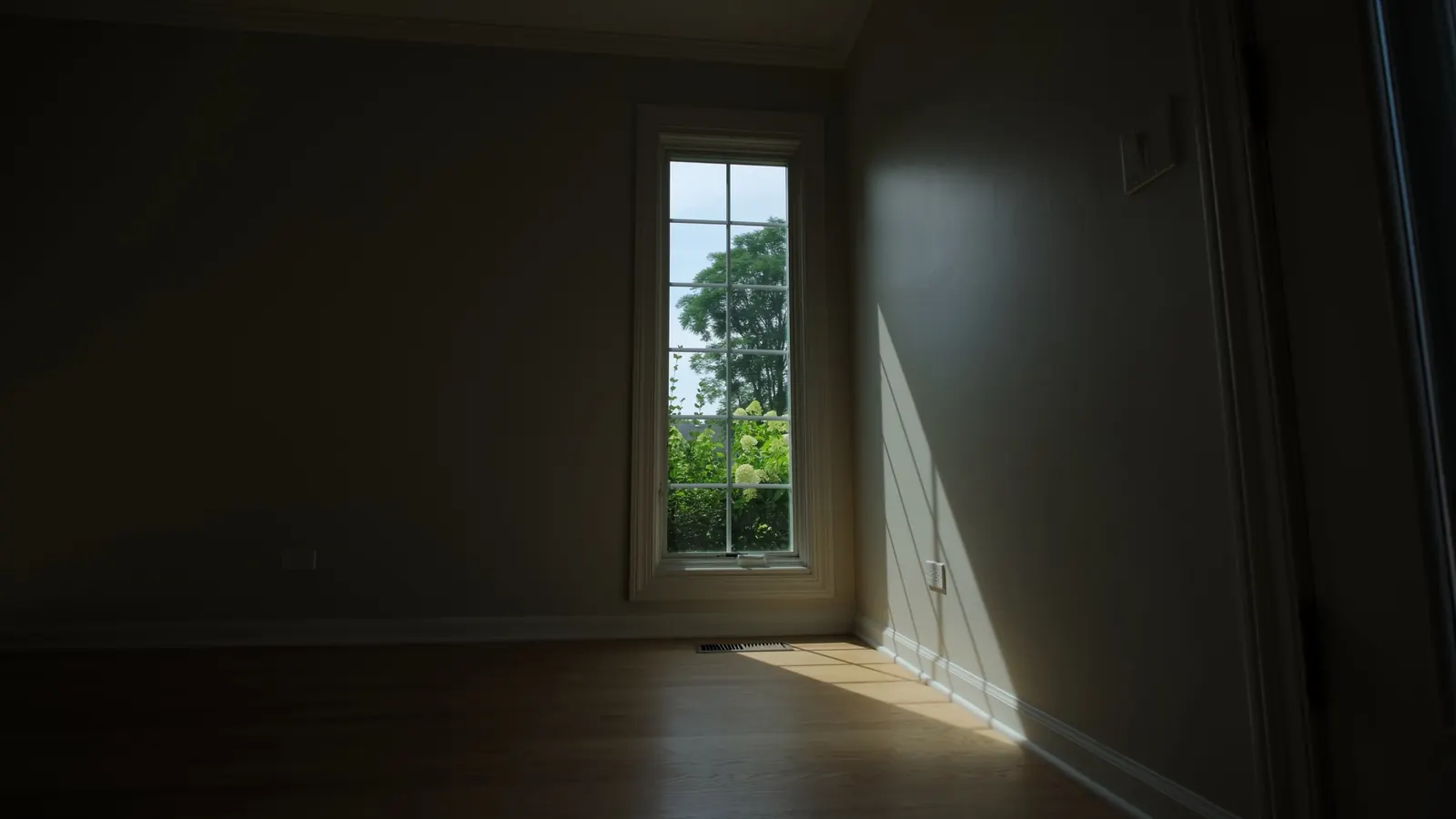
It’s late. The dishes are done, the messages answered, and everyone who needed you today got something from you. Now the house is quiet, and there is nothing. Not sadness, exactly. Not pain. Just a hollow place where you used to be.
You pick up the phone. Put it down. Open the fridge, close it. And the thought comes: what is wrong with me? I have a roof, people who love me, no real reason to feel like this.
Empty is not the same as nothing. The hollow is a feeling. It has a shape and an address in your body, and it has probably been waiting for you for a long time.
You don’t have to find a reason for it before you’re allowed to feel it. You don’t have to fix it tonight. You can start with the one thing you were never shown how to do: meeting it.
We’re Rytis and Violeta. For seven years we’ve led Feeling Sessions, with fifty to a hundred people lying down in silence at the same time. This is what we’d tell you if you were sitting at our kitchen table.
Why do I feel so empty?
Think back to the first time you cried as a small child. Somebody loved you, and they couldn’t bear the sound. So they gave you something to make it stop: a pacifier, then a cookie, then “big girls don’t cry.” Nobody meant harm. But the message your body learned was simple. This feeling is not allowed. Make it stop.
So the feelings did not go anywhere. They waited. And when that much is waiting underneath, what you feel on the surface can be a flat, grey nothing.
Then life fills the gap. Work, lists, other people’s problems, a series you can’t stop watching. Most of what fills a modern day is a pacifier, and it works, until it doesn’t. The emptiness shows up when the noise stops. In the evening. On a Sunday. After the kids leave home. After the big goal you worked so hard for, the one that was supposed to finally make you feel something.
That’s why it can arrive when life looks fine from the outside. Nothing is missing. Something is waiting.
What does feeling empty inside mean?
It doesn’t mean you’re broken, cold, or ungrateful. We wrote it in our book as plainly as we could: “You are not broken. You never were. You were only never shown how to feel.”
We think of the body as a train station. Trains come in and trains leave. Every feeling you refused to feel is a train that never got a track, waiting outside the station. When enough of them pile up, the station goes still. Nothing comes in, nothing goes out. From the inside, that stillness feels like emptiness.
So here is where we see it differently. You don’t need to fill the hollow with a purpose, a new hobby or a gratitude list. Any of those can become one more pacifier. The emptiness doesn’t need filling. It needs to be felt.
When people ask us, “What if I lie down and feel nothing at all?” our answer is simple: then feel the nothing. Numbness is a feeling too. So is boredom. Find where it lives in your body and stay with it. Often something is waiting just underneath.
We wrote the whole method down, step by step, in The Feeling Session. The short version is below, and you can do it tonight.
Why is there an empty feeling in my chest?
The emptiness can have a very physical place. A hollow under the ribs. A cold space behind the breastbone. A weight that is somehow also nothing. Arms that feel far away.
That’s not your imagination. A feeling is something physical: pressure, heaviness, a knot, a hollowness. The thoughts (“my life has no point,” “I don’t feel anything for anyone”) come a moment later, from the mind, trying to explain the sensation. A heavy thought is like a thermometer. It tells you there’s a fever. It isn’t the fever. When the thought comes, go to the place in the body.
If the chest feels more heavy than hollow, we wrote about that in heavy feeling in chest and sadness. And if the emptiness is more like being switched off, why do I feel numb inside goes further into it.
One honest note. If the feeling in your chest comes with pain, a racing heart or shortness of breath, or it’s new and you can’t explain it, see a doctor first. And if the emptiness has lasted for weeks and colors everything, talk to your doctor too. What we write about here is the feeling, alongside whatever care you need. This isn’t therapy, and we’re not therapists.
A ten-minute way to meet the emptiness
If the hollow is there right now, you don’t need to wait for a better moment. This is the moment. Read the steps once, then put the phone down and do them.
Practice10 min
Feel the nothing
- Find a place where nobody will need you for ten minutes. Your bed is fine. Turn your phone face down, or put it in another room.
- Lie down on your back. Let the bed carry you. Nothing to arrange, nothing to get right.
- Cover your eyes. A scarf, a sleep mask, a folded T-shirt.
- Put your arms by your sides, palms down. There is nothing to grab and nothing to hold on to.
- Close your mouth and leave the breath alone. Don’t breathe deeply. Don’t count.
- Stop moving. No scratching, no adjusting.
- Ask one question: where is the nothing in my body right now? Under the ribs? In the chest? In the hands? Take the strongest place you can find.
- Put all of your attention there, and keep it there. You’re not trying to change it. You’re not waiting for it to leave. You’re simply with it, the way you would sit with a friend who can’t find the words.
- Thoughts will come: “this is pointless,” “I feel nothing.” Let them pass like cars on a street. When you notice you’re in a story, come back to the place. No blame.
- If something starts to rise underneath, a pressure, a sadness with no story, tears, don’t run. Stay one more minute if you can. Stop whenever you need to.
When you finish, take the cover off your eyes slowly and feel the bed under you. What you might notice: some people find the hollow gets bigger before something else shows up under it. Some feel nothing the first time. Both are fine. You are always in charge. If it ever feels like too much, open your eyes, sit up, feel your feet on the floor, and reach for someone who loves you.
What we know about the hollow from the inside
This is how we tell it in our book: “Ten years ago, people who met Rytis saw a happy, free young man. Inside he was someone else entirely: shut down, anxious, carrying more than he could name, and wearing a very convincing face over all of it. For years he ate six or seven times a day, big portions of everything, and only much later, when he began to lie down and feel, did he discover how much rage that food had been holding down. He had no idea it was there.”
That’s the thing about a lid. From the outside it looks like calm. From the inside it feels like nothing. And under it, the feelings wait for someone to come and listen.
Ten minutes with the nothing may have given you exactly that: nothing. That happens a lot the first time, and the book is written for it too: the whole method, step by step, and our answer to the question you may be asking right now, what if I don’t feel anything.
When the hollow comes back
- Catch the first pacifier. When your hand reaches for the phone, the fridge or the glass, say inside: “Thank you, but this time I’m going to be with the feeling.” Stay with it for a moment before you decide anything. Once is a beginning.
- Ten seconds, three times. Before bed, close your eyes for ten seconds and find the strongest sensation in your body, even if it’s the nothing. Change nothing. Then carry on.
- Don’t make life decisions from the hollow. Not tonight. Don’t quit, don’t end things, don’t send the long message. Let it wait until you’re not in the middle of it.
- Say it to one person. “I’ve been feeling flat lately.” You don’t need to explain it. Saying it out loud to someone who loves you is part of the way through.
If the hollow feels closer to numbness, to being stuck, or to sadness with no reason, our states section looks at each of those too.
An empty house at night doesn’t need to be filled with noise. You can sit down on the floor in the dark and simply be there, the way you’d keep someone company without needing them to say a word.