
Written by Rytis & Violeta · Feeling Session founders · Updated May 2026
· 16 min read

TL;DR: How to stop overthinking, plainly — not by stopping thoughts. By dropping beneath them. The mind loops because the body has a sensation underneath that hasn’t been felt. Meet the chest, jaw, throat where the feeling actually lives. Once the body is met, the loop has nothing left to spin around.
Overthinking is the body asking the mind to handle a feeling the body can’t reach directly. The chest is tight. The jaw is set. The breath is shallow and high. The mind notices the discomfort and goes to work — replaying, rehearsing, scenario-building — until the sensation finally has somewhere to land. The thinking is the body’s substitute for feeling.
The Loop You Came Here With

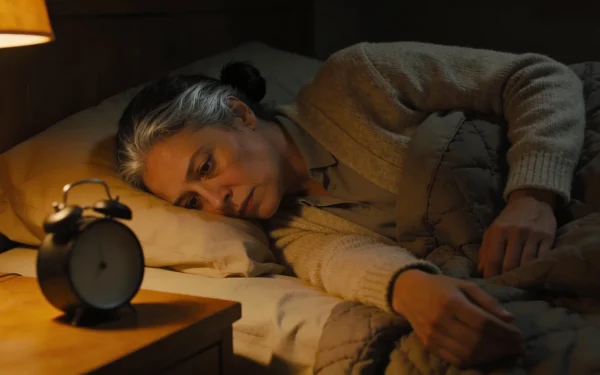
It’s 11 p.m. Or 3 a.m. Or you’re in the parking lot and you should already be inside. The same conversation. The email you didn’t send. The look someone gave you. The mind has been running it back for hours, on six different angles, in four imagined futures, and you’re tired in a way sleep doesn’t fix.
You searched how to stop overthinking because you’ve already tried the obvious things. Deep breaths. The phone in another room. Telling yourself, calmly, that this isn’t useful. The thinking went on. Maybe louder. The chest stayed tight. The jaw stayed set. The shoulders stayed up around the ears.
You are not doing it wrong. You are doing what people do when the inside of the chest has been holding something the head doesn’t know how to put down.
Here is the part nobody told you. Overthinking is not a thinking problem. It is a body problem dressed in thoughts. The mind is loud because the body has unprocessed sensation it can’t access directly. So the mind picks up the work — reasons, scenarios, what-ifs, replays — because telling a story about the feeling is closer to safe than feeling it.
That is why every “just stop” instruction has failed you. You can’t stop a story when a sensation is still asking for attention under it. You can only meet the sensation, and let the story quiet because it is no longer needed.
Before anything else — something small. Just for a second. The chest, where the breath actually lives. The jaw, probably set. The throat, probably narrow. The shoulders, probably high. The hands, possibly cold. None of that has to change. Just notice. That noticing is the move you’ll keep coming back to. Everything else is built on it.
Key Takeaways
- Overthinking is not a thinking problem. It’s a body holding sensation the mind has been asked to manage from above.
- Every “stop the thoughts” instruction fails because thoughts aren’t the source. They’re the symptom.
- Body markers of overthinking: tight chest, clenched jaw, raised shoulders, shallow breath, narrow throat, eyes darting under closed lids.
- The way through is down. Not up into more thinking. Not sideways into distraction. Down into the chest, throat, stomach where the feeling lives.
- A Short Body Reset meets a 3 a.m. spike. The Full Feeling Session works the deeper layer underneath.
- The part of you noticing the loop is not in the loop. That part is what the body has been waiting for the mind to remember.
What the Body Is Doing While the Mind Spins

While the loop runs, the body is doing something specific. Not abstract. Specific.
The chest is tight, halfway up — between the collarbone and the diaphragm. The breath is short and high, never reaching the belly. The jaw is set. The throat is narrow, like a hand around it. The shoulders are pulled up an inch from where they belong. The eyes dart, even with the lids closed. The stomach holds a knot, sometimes hot, sometimes cold. The hands may be cold. The skin between the shoulder blades is pulled tight.
That is the room the thinking is happening in. The mind didn’t make the chest tight. The chest was already tight, and the mind started looking for what to think about to explain why.
This is how to stop overthinking begins to make sense. You stop addressing the thoughts. You drop attention into the body the thoughts are happening in. Name one place. Tight chest. Hot throat. Heavy stomach. Pressure behind the eyes. Jaw set. One place. One sensation.
That naming, by itself, doesn’t fix anything. It does something more useful. It tells the body that the part of you running the show has remembered there is a body in the room. The mind has been working alone for hours. Acknowledging the chest is the first thing that softens it, even slightly.
If You’re in a Spike Right Now
If the loop is loud right now — if a fresh trigger has fired and the chest is closing as you read this — the deep work can wait. There is a smaller move for this minute. The Short Body Reset. Sit up. Both feet flat on the floor. Palms down on your thighs. Close your eyes if it’s safe to. Body still. Breathe four in through the nose, six out through the mouth. Name one sensation. Stay ten minutes.
That’s the whole thing. It won’t take the thinking away. It wasn’t built to. It tells the body the mind is no longer alone, and that small return lowers the volume on the loop. The deeper drop comes later in this article.
Going Beneath the Thoughts

So what is actually under the thinking? The honest answer is — it differs from night to night. Sometimes the loop is built on top of fear about something specific. Sometimes it’s grief. Sometimes anger that has been sitting in the body since a conversation last week, or last decade. Sometimes it’s the loneliness that surfaced when the room finally went quiet. The mind doesn’t show you the feeling. The mind shows you scenarios about the feeling.
You don’t need to figure out which feeling it is before you can feel it. The body knows. The body has been showing you in the chest, the throat, the stomach, the jaw — for hours, for years. The mind intercepted the signals and converted them into stories. Going beneath the loop is reading the signal directly.
What the Mind Is Doing vs What the Body Is Holding
| What the loop looks like (mind) | What’s underneath (body) |
|---|---|
| Replaying the conversation | A pressure in the chest that wasn’t allowed to be expressed |
| Rehearsing tomorrow’s meeting | A tightness in the throat that was learned in a different room a long time ago |
| What-if catastrophizing | A heaviness in the stomach the body has been carrying since the last loss |
| Analyzing what they really meant | A pulling in the ribs that wants to be sad and isn’t allowed yet |
| Re-deciding a decision already made | A back-of-the-skull pressure asking for the body to put something down |
| Endless self-critique | A throat that has been swallowing what it wanted to say |
| Listing every possible outcome | A jaw that has been set so long it doesn’t remember release |
This isn’t for diagnosis. It’s a way of reading the loop, the pattern the body has been running under it. The next time the same thought returns for the seventh time, the question isn’t why won’t this stop. The question is — what is the chest holding while this thought runs. The thought is the surface. The chest is the source.
If the loop is still running and you don’t have language for what’s actually under it, write one true sentence — 3 free answers, no sign-up needed. One honest sentence about what the body is holding is enough to interrupt the spinning.
Two reflection questions, then we go further.
What is the chest holding while the thought runs?
If the body could finish the sentence the mind has been starting all night, what would it say?
Don’t answer fast. Let the answer come from the chest, not the head. If nothing comes, the body is still in survival mode; that isn’t failure, just information. The body opens when it trusts you’ve actually stopped trying to solve it.
That is also why mind-only tools have a ceiling. Cognitive techniques speak the mind’s language to the mind. Useful for some things. Not useful when the call is coming from the chest. The same loop that ignores logic at 2 a.m. will ignore logic at 2 a.m. tomorrow, because logic is not the thing it’s asking for.
This is the same body asking the same thing under racing thoughts at night — different surface, same underneath. The same mechanism that makes the spiral worse in the dark — when daytime noise stops covering it — makes anxiety at night feel like a separate condition. It isn’t. It’s the same body finally being heard, with no buffer between you and it.
The Part of You Watching the Loop
Notice something. Right now.
There is the part of you running the loop. The chest is tight, the mind is listing, the jaw is set. That part is exhausted. It has been working since this morning, since last week, since whenever the thinking started. It has searched for hours and read seven different articles, and it is still here.
And there is another part. The part of you that just noticed — half a second ago — that the chest is tight. The part reading this sentence and quietly registering, yes, that’s what’s happening in me. The part watching the spiral from somewhere behind the spiral, without being inside it.
Those are two levels of the same body. The thinking. And the part aware of the thinking. They are not the same.
Here is what almost every overthinking guide misses. The part of you watching the loop is not in the loop. It has never been. It was there in every 3 a.m. you’ve had, every parking lot, every replay. It is here right now, reading. It has the chest under it, but it isn’t the chest. It has the thoughts running through it, but it isn’t the thoughts.
That part is what the body has been waiting for the mind to remember.
You don’t have to silence the loop. You don’t have to win against it. You have to drop your weight into the part already underneath the loop, watching. The thinking will keep happening for a while. Let it. The watching is not the thinking. The watching is what the body actually trusts.
How to Drop Beneath the Loop — The Full Practice
This is the deeper work. Not for the spike. For the layer underneath. The Full Feeling Session is what releases what’s been running the spinning for years.
Lie on your back. A bed, a mat, the floor — any of them. Palms down beside your hips, arms straight along your sides. Not on the chest. Not on the belly. Not crossed. Beside the body, palms facing the ground.
Cover your eyes. A scarf, a soft T-shirt, a cloth — something that closes the room down. Eyes closed underneath. The dark moves attention inward.
Body still. Don’t move to find a more comfortable position. The discomfort is part of what the body is finally being asked to feel. Nothing on your body. No phone on the chest. No weighted blanket. No hand. The body is open and free.
Breathe naturally. Don’t direct it. Let the breath find its own depth.
The thoughts will be loud for the first ten or fifteen minutes. Let them. Don’t fight them. Don’t replace them with better thoughts. Don’t talk back. Notice them, and put your attention beneath them — into the chest, the throat, the stomach, the jaw, wherever the sensation lives. The thoughts can keep going. They are running on the surface. Your attention has dropped underneath.
Around minute twenty or thirty, the body starts to settle into the other state. The sensations sharpen. What’s been running underneath the spinning shows itself directly — heaviness in the chest, tightness in the throat, pressure behind the eyes, heat across the face. Stay with it. Don’t analyze it. Don’t name it more than once. Just feel it.
Stay until it completes. The dentist analogy applies — you don’t get out of the chair with the work half-done. The wave will rise, peak, and move. Usually thirty to ninety minutes. Sometimes shorter, sometimes longer. The body decides, not the clock.
When the wave passes, move slowly. Drink water. Stay quiet for a while. The mind is going to be quieter — not because you silenced it. Because the body is no longer alone with what it was holding.
This is The Feeling Session — the practice the rest of this site is built around.
I notice it in my own practice on the nights when the same conversation has been replaying for hours. Lying flat, palms down beside the hips, eyes covered, around minute twenty-five — the loop is still happening, but it isn’t mine to chase anymore. The chest, finally, has somewhere to land. That landing is what the thinking was always trying to reach.
When you’re ready to take a real hour with the body — eyes covered, body still, the full session in your pocket — try Feeling.app free → is the home of the method as Rytis and Violeta teach it in Plateliai.
Violeta says it like this. The mind doesn’t stop because you tell it to. It stops because the body has finally been met. I had to hear her say that close to thirty times before I trusted it. Now I do.
This same observer is what is missing under chest pain anxiety and the loop that runs around can anxiety cause chest pain. It is the same shift the body is asking for under why can’t I cry — meet what is there, and the surface settles around it.
What to Do With This, Tonight
You don’t have to do the full hour tonight.
Five minutes is enough. Two minutes is enough. The body isn’t asking for a project. It is asking for one moment where the head stops pretending the body isn’t in the room.
If tonight you only do one of these, that is the whole practice.
Notice, once, the place in the body where the loop is loudest. Chest, throat, stomach, jaw, shoulders, ribs, back of the neck. Name it inside. Leave it alone after naming.
Sit up before bed. Feet on the floor. Palms down on your thighs. Close your eyes. Don’t move. Stay ten minutes. The Short Body Reset, no more. That is enough to land.
Don’t go searching for a better technique. The technique was never the issue. The techniques never reached the chest. Tonight, the chest gets reached. Even briefly. Even badly. That counts.
If the loop has been so loud for so long that you can’t eat, can’t sleep, can’t function — the practice is not a substitute for support. Both, not either. The practice meets the layer underneath; help meets the surface when the surface is on fire.
On the nights when nothing seems to work, remember this. The part of you reading this sentence is not the loop. It has been here the whole time, watching, steady, not in the spinning. You don’t have to make it appear. It has been waiting.
You came here for how to stop overthinking. The honest answer was always going to be — you don’t stop the thinking. You meet what is underneath it, and the thinking finds it has nothing left to do.
For tonight — this chest. This breath. This small sentence, allowed to be true.
What Someone Said After the Session
I joined live, and the energy traveled through the whole body. At times I felt burning and heat, and the realization came that I am very afraid to step out of my comfort zone. By the end the chest had stopped pressing. Only peace and lightness remained where the panic had been.
— Feeling Session participant, Plateliai
Frequently Asked Questions
How do I stop overthinking everything?
You don’t stop the thinking by addressing it. You change what you’re addressing. The loop is fed by an unfelt sensation in the chest, throat, jaw, or stomach. Drop attention beneath the thought into the body that’s holding it. Name one place. Stay ten minutes. The thinking quiets when the body has been heard.
Is overthinking a sign of anxiety?
Often, yes. Anxiety is unfelt activation in the body — a chest that’s been bracing for something, a stomach holding a low alarm, a jaw that hasn’t released. The mind responds by spinning thoughts to manage the sensation. The spinning isn’t the anxiety. The body underneath is. An anxiety test can help clarify what’s actually running before you start.
Is overthinking a sign of depression?
It can be. Rumination — replaying the past on a loop — is one of the most reliable surface symptoms of depression. But the loop isn’t the cause. Underneath, the body is usually holding grief, exhaustion, or anger that hasn’t moved. Meeting that — directly, in the body — is what eases both the rumination and the weight pressing on it.
How do I stop overthinking at night?
Night removes the buffer. Daytime noise was covering what the body was holding all day. When the room goes quiet, the body finally has space, and the mind translates the body’s signal into thinking. Five minutes of the Short Body Reset before bed — sit up, palms down on your thighs, eyes closed, body still — meets the body before the bed does, and the loop has less fuel by the time you lie down. The same mechanism shows up in racing thoughts at night.
How do I stop overthinking in a relationship?
Relational overthinking is the loop dressed in someone else’s behaviour. Replaying the text, analyzing the silence — none of it is about the text or the silence. It is about a sensation in the chest that already lived there, and the relationship is now activating it. Meet that sensation in the body, and the analysis softens.
Is overthinking a trauma response?
It often is. When a younger version of you learned that thinking faster was safer than feeling, the loop became a survival strategy. The body learned: feel = danger, think = stay alive. Meeting the chest in stillness is how the body slowly learns the rule has changed.
What’s the root cause of overthinking?
A body holding sensation the mind has been asked to manage from above. The specific sensation differs — fear, grief, anger, shame — but the mechanism is the same. The mind is loud because the body is loud and unmet. Thoughts are the substitute for feeling, not the cause of the discomfort.
Can therapy help with overthinking?
Yes, often — especially when the therapist works with the body, not just the story. Talk-only approaches can give you understanding without ever loosening the chest. Body-based work, somatic therapy, and the stillness practice in The Feeling Session reach the level the loop is generated at. Both can sit alongside each other.
Can chest tightness from overthinking be dangerous?
The tightness from chronic overthinking is the body bracing against unfelt sensation, not a heart event. That said, the experience is real. If the chest is your worry specifically, can anxiety cause chest pain walks through how to tell. When in doubt, get the heart cleared, then come back to the body work.
How long does it take to stop overthinking?
There is no fixed clock. Some people feel real relief from one full session. For others, the body needs weeks of short returns before it trusts it’s allowed to rest. The point isn’t to never overthink again. It is to come back to the body when the loop starts.
What if the techniques I have already tried keep stopping working?
Almost always because every technique was a way of speaking to the mind. The mind cooperates briefly, then the body remembers it hasn’t been heard, and the loop returns. Practices like how to ground yourself point at the same shift — meet the body, and the surface settles on its own. If clarity is still missing, the anxiety quiz can help name what the body is carrying tonight.
A note on this work: The Feeling Session is a body-first emotional practice — not therapy, not medical care, and not a substitute for either. If you are in distress, dealing with severe symptoms, or unsure what you need, please reach out to a licensed mental-health professional. The information here reflects our lived experience guiding sessions; it is offered as support, not as diagnosis or treatment.
How do I stop being an overthinker?
Slowly, and not by force. Lie still. Palms beside your hips. Eyes covered. Stay with what rises until it moves on its own. The body has its own pace. The work is to stop interrupting it.