
Reviewed by Rytis & Violeta · Feeling Session founders · Updated May 2026
· 12 min read

You didn’t search this from curiosity. Your chest hurts, your mind went to the worst place, and now you can’t tell which explanation to trust. That uncertainty — not just the pain — is what makes this so hard.
Yes, anxiety can cause chest pain. Sharp pain, pressure, burning, tightness, a heavy sensation that feels alarmingly physical. The pain is real. It is not “just in your head.” But chest pain can also signal urgent medical problems, so the safest path is specific: know when to seek immediate care, and know what pattern points to anxiety so you can stop getting trapped in the same loop every time.
By the end of this page, you’ll have a clear way to respond in the moment, a safer way to interpret what keeps happening, and one grounded practice you can use today.
Key Takeaways
- The body always knows before the mind does.
- Anxiety is information from the body — the loop releases when you stop arguing with it.
- “Why” matters less than where it lives in your chest, throat, jaw, or stomach.
- Stillness is the practice — not a mood, not a goal.
- One small thing today is enough.
Why “yes” isn’t enough on its own

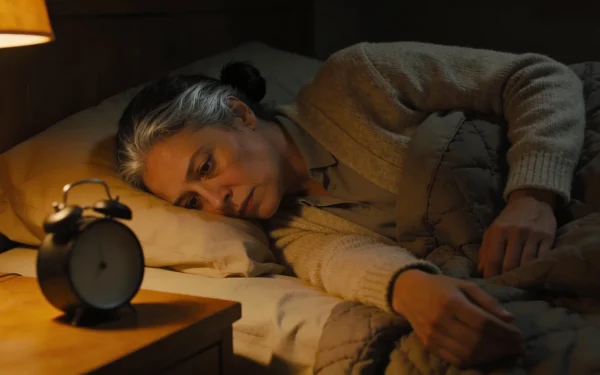
“Yes, anxiety can cause chest pain” is medically accurate but emotionally incomplete. It doesn’t help you at 2 a.m. when your chest tightens and you’re lying still, wondering whether this time is different.
Anxiety-related chest pain happens because your nervous system activates a survival state. Adrenaline rises. Breathing changes. Muscles brace. Your chest wall tightens. Sensation becomes louder. That combination can produce pain that feels dangerous even when no physical damage is happening.
At the same time, chest pain should never be dismissed automatically. If pain is new, severe, crushing, or comes with shortness of breath, fainting, nausea, sweating, pain radiating to your jaw, arm, or back — or a gut sense that something is very wrong — seek urgent care right away. If your risk factors are significant or your intuition says this is not my usual pattern, treat it as urgent. Safety first.
This isn’t fear-based advice. It’s clarity-based. Rule out emergencies first. Then, if evaluation is reassuring, you can work with the anxiety mechanism directly instead of reliving the same uncertainty every week.
What I’ve noticed in people I talk to — and in my own anxious periods — is that the second fear usually hurts more than the first sensation. The first signal is chest discomfort. The second signal is I might be dying right now. That second signal amplifies everything.
For trusted medical context, the NIMH overview on anxiety disorders and MedlinePlus guidance on chest pain are solid starting points.
One distinction worth carrying with you:
A scared body can produce real pain without producing damage.
That’s small on paper. It’s life-changing during an episode.
Why your chest hurts when fear spikes — even without danger

When anxiety rises, your body doesn’t wait for intellectual certainty. It prioritizes speed over nuance. This survival design is useful in real danger and exhausting in ordinary life, where most threats are social, emotional, or anticipatory.
You can feel the mechanism directly, even if you don’t fully understand it yet.
Breathing shifts first. You may breathe faster or higher in the chest, sometimes without noticing. That creates chest tightness and lightheadedness, and can irritate the intercostal muscles between your ribs. Over time, this pattern makes your chest feel sore or sharp in specific spots.
Then muscle guarding layers on. Shoulders lift. Neck tightens. Pectoral muscles brace. The front of your body prepares for impact that never comes. After hours or days of this, your chest aches in a way that feels deeply convincing.
Then attention narrows. You scan for danger. Every heartbeat feels louder. Any twinge becomes evidence. This matters more than it sounds, because attention changes sensation. The more you monitor your chest in alarm mode, the more intense everything feels.
I noticed this in myself during a high-stress season: I kept checking whether my heartbeat felt “normal,” which made it feel less normal. The loop wasn’t imaginary. It was physiological amplification, running on its own.
There’s also a timing pattern that confuses people. Anxiety chest pain can appear during stress, but it can also show up after stress — when your system finally has room to feel what it was suppressing. That’s why people often say, “I was fine all day, then at night it hit me.”
For most people, the loop looks like this:
- Sensation in chest.
- Catastrophic interpretation.
- Adrenaline surge.
- More chest sensation.
- More catastrophic interpretation.
Breaking this doesn’t start with arguing your thoughts into submission. It starts by giving your body enough safety signals to exit emergency mode.
If you’re in that exhausted state where everything feels too loud and you need something calm and body-first, this guided path offers 50 deep answers shaped by real Feeling Sessions, so you can settle your body before overthinking takes over.
If can anxiety cause chest pain is still sitting in your body right now, See what your body already knows — 3 free answers — You don’t need the perfect words. One honest sentence is enough to start.
What keeps the pattern running — and what actually breaks it

If this keeps happening, it isn’t because you’re weak or “bad at coping.” Your system learned a protective pattern and now runs it automatically.
The hardest part is unpredictability. When you can’t predict the next episode, you start fearing it. That anticipatory fear changes your sleep, your activity, your focus, your social behavior. Life shrinks around symptom prevention — and the shrinking itself adds stress.
The second hardest part is internal distrust. You stop trusting your own body. Every sensation feels suspicious. That split — my body is the enemy — adds chronic tension, which feeds the very symptoms you fear.
The way out is neither denial nor obsession. It’s two things working together: calibrated interpretation and repeated regulation.
Calibrated interpretation means asking, each time: Is this my known anxiety pattern, or a new red-flag pattern? If it’s new or alarming, seek care. If it’s familiar and previously evaluated, shift to regulation instead of emergency rumination.
Repeated regulation means training your body, not just reassuring your mind. People improve when they stop trying to win against symptoms and start practicing a steady, predictable response every time symptoms show up.
What makes episodes worse is usually consistent: immediate catastrophic searching, shallow upper-chest breathing, posture locked in vigilance, repeated pulse checking, self-judgment (Why am I like this again?).
What helps is also consistent, though less dramatic: a rehearsed response you trust, low and slower breathing without forcing, grounding through contact points, language that reduces threat, and follow-up care for chronic anxiety — not just acute episodes.
That language piece matters more than it sounds. Compare these two internal responses:
“I’m in danger. I need this gone now.”
versus
“My body is sounding an alarm. I’ll check safety, then help it settle.”
One escalates. One regulates.
The Wikipedia overview of panic attacks gives a readable synthesis of the body-mind loop behind these episodes, with source links if you want to go deeper.
You don’t calm anxiety by proving you’re never in danger. You calm it by teaching your body what safety feels like — repeatedly, in real time.
A 10-minute reset when chest pain and panic collide
This is your practical next step. Not for tomorrow when you feel better. For today.
Use this only after urgent medical red flags are ruled out or absent. If red flags are present, seek emergency care.
Find a place to sit. Keep your spine supported if possible. Place both feet on the floor. Rest your hands on your thighs with palms facing down. Close your eyes, or gently cover them with one hand if that feels safer. Keep your body still.
The reset (about 10 minutes)
1. Name the moment (30 seconds).
Quietly say to yourself: This is chest pain with anxiety. I will check safety and help my body settle.
2. Find contact (1 minute).
With eyes closed or covered, notice three points where your body touches something: feet on floor, thighs under hands, back against support. Don’t change anything. Just feel contact.
3. Lengthen the exhale (3 minutes).
Inhale through your nose for a comfortable count of 4. Exhale gently through your mouth for 6. No deep forcing. Keep it soft. If 4-and-6 feels hard, try 3-and-4. The ratio matters more than the size of the breath.
4. Un-brace the chest (2 minutes).
On each exhale, imagine the front of your chest softening by five percent. Not collapsing — just un-bracing. Let your shoulders be heavy. Let your jaw be loose.
5. Contain the spiral (2 minutes).
When fear thoughts appear, respond with one line: Noted. I’m regulating first. Then return to contact points and exhale length. You don’t have to answer every thought. Just one line, then back to the body.
6. Re-enter slowly (90 seconds).
Keep your eyes closed. Notice if intensity shifted even ten percent. Then open your eyes slowly and look at one stable object. Let your gaze rest there for three breaths before you stand.
The goal is not perfection. The goal is to interrupt escalation. A ten to twenty percent drop in intensity is a win, because it teaches your nervous system that panic is not the only trajectory.
If this works sometimes but not always, that is still progress. Nervous system learning is nonlinear. Consistency beats intensity.
When I’ve used this under real stress, the biggest shift was not that sensations disappeared. It was that urgency dropped. Once urgency dropped, options returned.
Relief often begins as I can handle this moment — not this is fully gone.
For long-term reinforcement, pair this reset with basic medical and lifestyle support: sleep regularity, caffeine awareness, hydration, and structured anxiety care where needed. Not glamorous. Disproportionately effective.
What softens when you stop fighting the signal
Something shifts over time when you practice this. Not all at once, and not dramatically. But the relationship changes.
At first, anxiety chest pain feels like betrayal — your own body turning against you. Later, with repeated pattern recognition, it starts to feel like a dashboard light. Still unpleasant. Less mysterious. More workable.
Three things usually soften.
Catastrophic certainty softens. You move from this means disaster to this may be my alarm system — I’ll verify and respond.
Symptom obsession softens. You spend less time monitoring and more time living. The gap between episodes starts to matter more than the episodes themselves.
Self-blame softens. You stop calling yourself dramatic and start recognizing a protective nervous system doing its best with outdated settings.
This is where people regain agency. You start noticing early cues — jaw tension, upper-chest breathing, late-night scanning, emotional overload — and you intervene before the spiral peaks. You become someone who can meet the sensation before it becomes a crisis.
If you want a structured way to keep practicing this — not alone, and not in your head — this is a gentle, body-first guide built from 1,000+ real sessions, designed for moments when you feel overwhelmed, numb, or stuck.
What this search was really about
You came here asking whether anxiety can cause chest pain. The answer is yes. But the real question underneath was probably closer to: Am I okay? Can I trust what my body is telling me? Will this keep happening forever?
The honest answer: you keep medical safety in view. You stop feeding false alarms. You build trust through repetition. Not once. Not perfectly. Just consistently enough that your body learns a different ending to the same story.
The pain is real. The panic loop is learned. And the path out is teachable.
Tonight, your next step is simple: save the 10-minute reset, and use it at the first sign of spiral — not the worst point. Early response changes outcomes.
3 answers. 30 seconds each. No credit card. Yours to keep.
The Feeling Session is the body practice this work is built around.
Frequently Asked Questions
How can I tell if my chest pain is anxiety or something dangerous?
You can’t diagnose serious chest pain by guesswork alone. If pain is new, severe, crushing, radiating, or comes with fainting, shortness of breath, heavy sweating, nausea, or a strong gut sense of danger — seek urgent care immediately. If urgent causes have been ruled out and the pattern repeats alongside anxiety, then use a body-first regulation response early.
Why does anxiety chest pain feel so real if it isn’t a heart attack?
Because it is real sensation caused by real physiology — muscle tension, altered breathing, adrenaline. The difference is mechanism, not imagination. Anxiety pain comes from alarm activation. Cardiac emergencies involve different underlying pathology. Real sensation, different source.
Can anxiety cause chest pain for days?
Yes. When your system stays activated and chest muscles remain guarded, pain can persist or recur for days. Ongoing stress, poor sleep, and repeated symptom checking prolong it. Persistent or changing pain should still be medically evaluated, especially if your pattern shifts.
What should I do in the moment when fear spikes in my chest?
First, check for red flags. If none are present and this matches your known anxiety pattern, move to regulation: feet grounded, palms down on your thighs, eyes closed or covered, slow exhale longer than inhale, one calming phrase repeated. The goal is reducing escalation, not forcing instant disappearance.
Is it normal to fear I’m dying even after tests come back normal?
Yes. This is common in panic and health-anxiety loops. Reassuring test results remove one layer of uncertainty, but your nervous system may still fire old alarm patterns. Recovery usually comes from repeated body-based regulation plus gradual cognitive reframing — not reassurance alone.
Will this go away if I just ignore it?
Usually not. Ignoring without regulation can leave your body running in threat mode indefinitely. A better approach: acknowledge the signal, verify safety, run a practiced calming response. Consistent repetition teaches your system that sensations are tolerable — and that not every alarm requires a catastrophe.
What is can anxiety cause chest pain?
Can anxiety cause chest pain is a body-level experience, not just a thought pattern. It often shows up as numbness, disconnection, or an inability to name what you feel — your nervous system responding to something it hasn’t fully processed. It is not a flaw. It is protection that outlived its purpose.
What causes can anxiety cause chest pain?
The causes are rarely single events. Can anxiety cause chest pain typically builds from accumulated stress, relational patterns, unprocessed grief, or early environments where certain feelings were not safe to express. The body adapts, then the adaptation becomes the pattern.
A note on this work: The Feeling Session is a body-first emotional practice — not therapy, not medical care, and not a substitute for either. If you are in distress, dealing with severe symptoms, or unsure what you need, please reach out to a licensed mental-health professional. The information here reflects our lived experience guiding sessions; it is offered as support, not as diagnosis or treatment.
How do I know if my chest hurts from anxiety?
Less by doing, more by stopping. The work is letting the body do what it already knows how to do, given enough stillness. Stay with the sensation underneath the question. That’s the doorway.
What is the 3-3-3 rule for anxiety?
It usually means your body is holding something the mind doesn’t yet have words for. The body has its own pace. The work is to stop interrupting it.