How to Release Anger Stored in the Body (Without Hurting Anyone)
No screaming, no hitting pillows. How to release anger stored in the body: where swallowed anger hides as heat or trembling, and why it stays until felt.


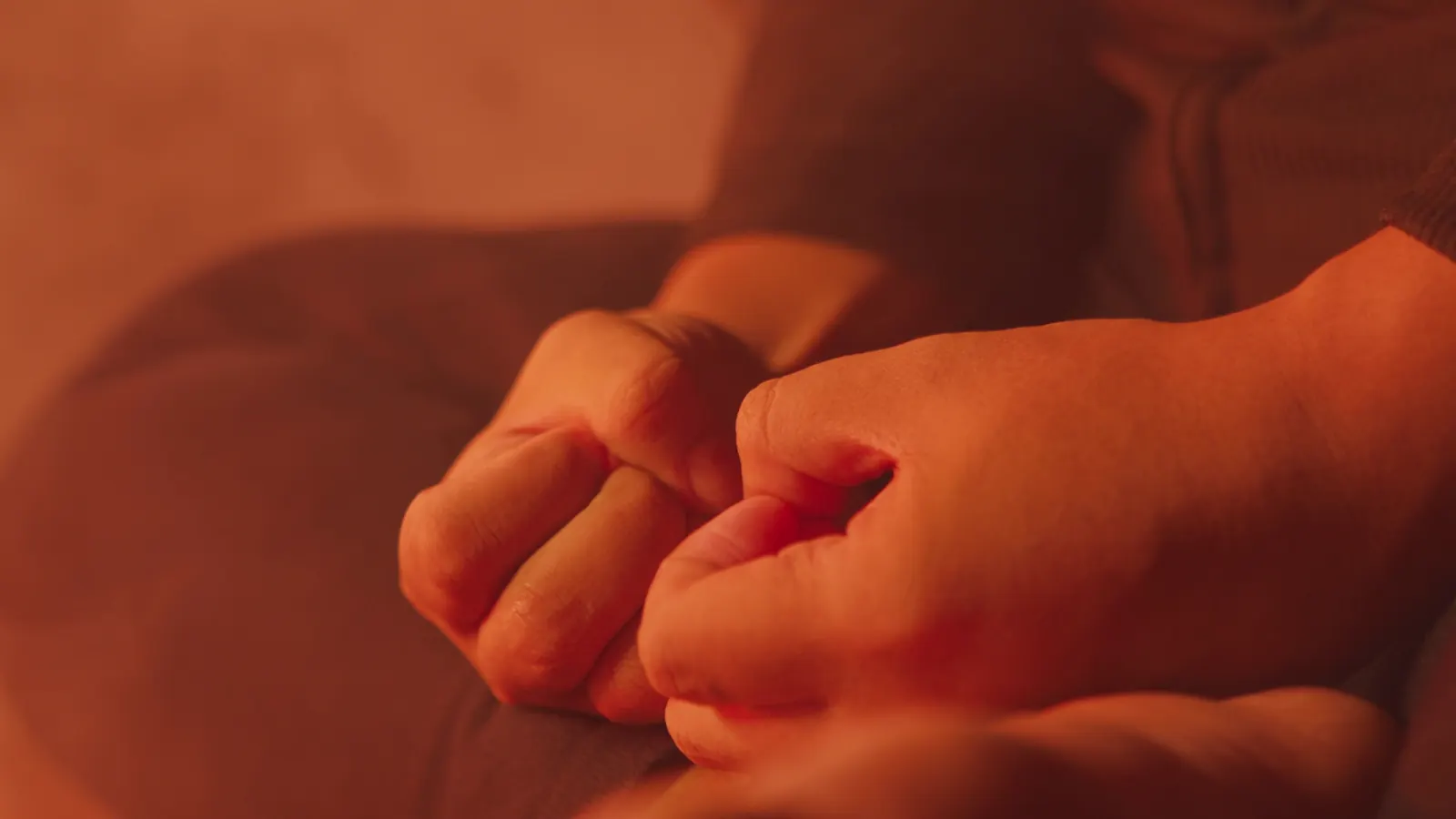
You smiled through the whole family lunch. You said “it’s fine” when he forgot, again. You answered the email politely. And now, hours later, your jaw aches and you just snapped at the dog.
The anger didn’t go anywhere. You just put it somewhere.
Most of us were taught that anger is bad, ugly, unspiritual, dangerous. So we smile over it. We swallow it. We turn it into politeness, into overeating, into a sharp tone with the wrong person three days later.
But you don’t have to get rid of your anger to be free of it. And you don’t have to hurt anyone, yourself included, to let it move.
Where is anger stored in the body?
Nobody can give you a map that’s true for every body. In our book we describe anger in the body as the heat, the trembling, the pressure. Where it sits is different for each of us.
So look for it the way you’d look for a sound in a quiet house. Start in the places unfelt feelings tend to wait: the chest, the throat, the belly, the jaw you clench when you sleep. Then check your hands. Do they want to make fists? Check your shoulders. Are they up near your ears? Check your face. Is there heat rising into it?
Wherever it’s hottest or tightest, that’s the place.
“Stored” is a good word for it. A feeling you didn’t let move doesn’t vanish. It waits. And every time life touches it, a tone of voice, a bill, a message from your mother, it lights up again.
Anger in the body: why it stays
Anger stays not because it’s too big, but because we decided it was the wrong kind of feeling. Anger is not evil. Splitting feelings into good and bad is exactly what locks them in.
Violeta says it this way: “There’s as much anger in you as there is divinity.”
You may have been told to calm it down, count to ten, or breathe it away. We don’t do that. Calming techniques push it back under the lid, politely. Deep breathing can be a beautiful thing, and it can also become one more pacifier. In our sessions, the breath is left alone.
And there’s a cost to keeping it under the lid. Violeta again: “If you keep your power under your foot, of course everyone keeps you under their foot.”
Here is the surprising part. People who make peace with their anger often become calmer, not angrier. And they stop being walked over. When you respect your own anger, other people start respecting you.
How to release suppressed anger without hurting anyone
There’s a paradox in the word “release.” Rytis puts it like this: “Your job isn’t to release the feeling. Your job is to give the feeling a path to rise and move through the body.”
You don’t need to release anger, and you don’t need to manage it. You need to feel it.
Feeling it is allowed. Throwing it at someone is not. You can feel the urge to slam the door with your whole body, and not slam the door. Let it boil inside, like water in a pot with the lid off. It will boil, and then it will settle.
That’s different from both things you were taught. Not swallowing it, and not exploding with it. A third way: staying with it, still, while it does what it needs to do in your body.
When anger has moved, it sometimes turns into something else, like sadness. If that’s where you land, read where sadness is stored in the body. And if your anger is years old and has a name, how to let go of resentment is written for you.
One thing comes before all of this. If you are angry because someone is hurting you, your safety comes first, always. Feeling your anger never means staying where you’re not safe.
This is the same thing we teach in every session, and all of it is in The Feeling Session.
If your jaw is tight right now, or your hands want to slam something, start here.
Practice5 min
Hello, anger
- Sit or lie down. If you lie down, cover your eyes and put your arms by your sides, palms down. Palms down tells the body there is nothing to grab.
- Close your mouth and leave the breath alone. You don’t need to calm it.
- Say inside: “Hello, anger. I allow myself to be angry.”
- Find it in the body. The heat, the trembling, the pressure. Take the strongest place.
- Watch it there, without pouring it onto any person. When your mind starts replaying the argument or writing the perfect reply, let the thought pass and come back to the heat.
- If you feel the urge to move, to hit, to get up, feel the urge itself with your whole body, and stay still.
- Stop whenever you need to. Don’t send any message until it has settled.
What you might notice: you may find something soft underneath once the heat has passed, a sadness or a tiredness. Or only heat, the first time. Either way, you haven’t done it wrong.
We both hid our anger, too
We both learned this the hard way. Rytis had a great deal of anger in him, and for years he covered it with a thick layer of spirituality. It cost him a part of his strength, and in the end he had to meet the anger anyway.
Violeta, in the house in Madeira where we used to run retreats, would sometimes boil over, shout, and order people out of the house.
At first we both tried to hide our anger from everyone. It didn’t work. What worked was feeling it.
The book has a whole chapter on fear, anger and sadness, written the way we speak in a session, for the day the heat comes back after the next “it’s fine.”
Before you go to bed angry
- Find the one thing you swallowed today. Not the whole history. Just today’s “it’s fine.” Lie down with it for five minutes.
- Check your jaw before you sleep. If it’s clenched, don’t force it loose. Put your attention there and feel what’s in it.
- Ask the mirror question. If someone made you furious today, ask quietly: where do I treat myself like that? Where don’t I allow myself to be like that?
- Write nothing tonight. No angry text, no email, no “we need to talk.” Let the heat settle before you put a single word on a screen.
Resentment, frustration and the sadness that sometimes waits under anger each get their own page in our emotions section.
Imagine a summer storm over the house. You don’t go out to fight it, and you don’t pretend it isn’t there. You sit by the window with the lights on, and you watch it.