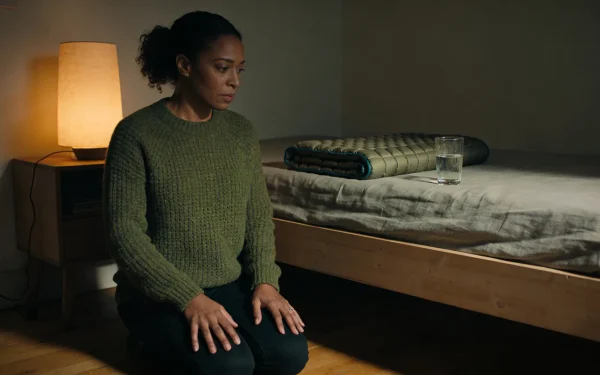
title: “When “Feel Your Feelings” Feels Impossible at Night”
slug: “feel-your-feelings-without-performing-peace”
description: “When nights get loud, this guide helps you feel your feelings in your body so chest tightness softens and you can finally rest with less fear.”
keyword: “feel your feelings”
secondary_keywords: “emotional awareness, body sensations, somatic feeling, numbness recovery, embodied emotion, emotional regulation, mindfulness, anxiety support”
frase_score: “pending”
status: “draft”

Written by Rytis & Violeta · Feeling Session founders · Updated May 2026
· 12 min read

You didn’t search feel your feelings because you wanted another slogan. You searched because something specific keeps happening at night. The room goes quiet. Your chest gets tight. Your mind gets loud. And the tools that sounded so wise at noon feel completely unreachable at 2 a.m.
Feel Your Feelings is not proof something is wrong with you — it’s a sign your body and your inner life have been carrying too much alone.
Then the second layer shows up: self-doubt. Why is this still happening? Why can’t I do something this basic? Why do I know so much and still feel so far from myself when it matters most?
If that’s where you are right now, I want to meet you there directly. Not with performance. Not with a new identity to put on. Just with one usable way back to your body when the spiral starts.
You do not heal by leaving yourself; you heal the moment you stay.
By the end of this guide, you’ll have one clear action you can trust tonight — especially when your system is loud and your thoughts are fast.
Nothing is wrong with you.
When feeling seems impossible, the problem is usually not willingness. The problem is protection. Your system learned that fully feeling was unsafe, overwhelming, or unsupported — so it built speed, analysis, numbness, and over-control to keep you functional. That’s not failure. That’s intelligence that has been overworking for too long.
Not perfectly. Not forever. Just one honest moment at a time.
Why “feel your feelings” sounds simple and still feels impossible

Sometimes the simplest instruction lands in the hardest place inside you.
The hardest part is rarely identifying the emotion. The hardest part is knowing what to trust when everything inside gets loud.
One part of you says, Stay here.
Another part says, Get out.
Another part tries to solve your entire life before your next breath.
Freeze makes sense in that state. So does scrolling. So does overthinking. So does trying to become “spiritual” in exactly the moment your body is asking for plain, simple contact.
Most of us were taught to explain ourselves, improve ourselves, and regulate ourselves in public-facing ways. Very few of us were taught how to stay with a tight throat, a burning chest, a clenched jaw, or a hollow stomach — without turning it into a project. So when someone says “just feel it,” your body often hears: Lose control and deal with the consequences alone.
That fear is not random. It’s learned memory.
A simple distinction helps right away:
A feeling you cannot locate becomes a mental emergency.
A feeling you can locate becomes a process.
That one shift is small. But it changes everything. Your mind no longer has to invent ten stories per minute about what’s happening. It can orient around something real: pressure here, heat here, ache here, blankness here. Shame starts to loosen when sensation gets specific.
What is happening under the surface

Your body already knows. It’s been signaling the whole time.
Thought is not the enemy. Thought helps with meaning, boundaries, planning, and repair. But when activation is high, sequence is everything.
Your body signals first.
Your mind interprets second.
That signal channel — often called interoception — is your direct read of internal states like pressure, heat, constriction, heaviness, hollowness, and collapse. Better interoceptive contact is associated with better emotional processing (NIH review). When that contact is weak, the mind fills the gap with urgency: Fix this. Escape this. Explain this before it gets worse.
Then the second wave hits: judgment about the activation itself.
I should be over this.
I know better than this.
If I let this open, I won’t come back.
This means I’m failing again.
Now one feeling is carrying sensation, fear, and identity threat at the same time. No wonder it feels like too much.
What helps is not suppression. And not flooding. What helps is contact plus witnessing. One part of you feels directly in the body. One part of you observes steadily. Neither part abandons you.
This observer layer is not cold detachment. It’s a grounded inner stance that says, Something intense is here, and I am still here too. In practice, it can sound like: There is tightness in my chest. Not: I am broken.
It can sound like: Heat is rising in my throat. Not: I’m about to collapse forever.
Observer language reduces panic because it separates sensation from identity. You are not the wave. You are the one meeting the wave.
A useful way to recognize this in real time: if your inner voice becomes absolute, catastrophic, and urgent, you are likely inside the fear loop. If your inner voice becomes specific, simple, and present-focused, observer capacity is coming online.
The exits that pull you out of feeling

You probably already know your favorite door. You’ve used it a thousand times.
You usually don’t leave yourself by accident. You leave through familiar doors — and each one can look “reasonable” in the moment.
Sometimes it’s analysis. You feel pain for three seconds, then your mind builds a full map of your childhood, your relationship patterns, your next hard conversation, and your life plan for the next six months. Insight takes over. Contact disappears.
Sometimes it’s performance. You jump to gratitude, perspective, forgiveness, or a “higher view” before your body has been felt. The words sound mature. But your chest is still braced and your stomach is still hard.
Sometimes it’s urgency. You clean, text, snack, scroll, work, organize, or plan. Activity replaces presence. You look productive while your body keeps carrying the original charge.
Sometimes fear wears a spiritual costume and calls itself intuition. It feels sharp, immediate, and absolute. It demands immediate action and punishes pause. Real intuition is usually quieter. It doesn’t need panic to make a point.
When you notice one of these exits opening, you don’t need a dramatic reset. You need a small interruption that returns authority to your body. Name what’s happening in plain language: “I’m explaining, not feeling.” Find one sensation and locate it exactly: pressure in the sternum, heat in the throat, knot in the gut, weight behind the eyes, or flat numbness across the chest. Drop the life mission for this window: “I’m not solving my whole life in this moment.” Give the moment a container: ten minutes, then reassess.
That’s not avoidance. That’s emotional craftsmanship. Clear limits make deeper contact possible because your system knows it won’t be trapped in endless intensity.
If the anxiety is still sitting in your body right now, Write one true thing — 3 free answers, no sign-up needed — When something here made you pause, that pause is information. Your body knows more than your mind has caught up to.
A 10-minute practice to feel your feelings tonight

You don’t need to be ready. You just need to be willing to lie down.
This is not a test. This is permission.
-
Entry (30 seconds)
Lie on your back. Hands beside your hips, palms down. Close your eyes or cover them gently with a shirt or scarf. Set a 10-minute timer. -
Body location (30–60 seconds)
Ask yourself quietly: “Where is the heaviest point right now?”
Pick one location only: throat, chest, stomach, shoulders, eyes, or a clear area of numbness. -
Tolerance (6 minutes)
Keep your body still. No swaying, rocking, stretching, or breath control. Let your attention rest on that exact point. If intensity rises, stay with the edge you can tolerate. Don’t force depth. Build trust. -
One quiet truth (throughout)
When thoughts pull you away, label softly: “thinking.”
Return to sensation.
Return again.
Return again.
The return is the practice. -
Integration (2–3 minutes)
When the timer ends, keep your eyes closed for one breath. Then write one line:
“Right now, the sensation is , and it feels .”
Choose one small next step: water, shower, short walk, sleep, or one honest message.
What matters most in this practice is not intensity. It’s precision. If your attention keeps drifting into story, gently reduce the scope. Instead of “my whole relationship,” feel the exact pressure under the collarbones. Instead of “my whole future,” feel the drop in your stomach. Each time you narrow to direct sensation, your nervous system gets a clear signal: I’m here, this is finite, I can stay.
If intensity spikes
Open your eyes. Look around and name five neutral objects. Put both feet on the floor. Feel contact with the ground. Pause and return later with a shorter window.
If you feel nothing
Stay with “nothing” as sensation: blank, far away, cotton-like, frozen, heavy. Numbness is not failure. Numbness is guarded contact.
If grief rises fast
Let pace lead. Stay still. Keep attention on location. Skip interpretation while the wave is active. Meaning can come later.
If sessions repeatedly trigger panic, dissociation, or fear of harming yourself or someone else, pause and bring this to a licensed mental health professional or physician you trust. If there is immediate safety risk, contact local emergency support (U.S.: 988 Lifeline).
What changed, what softened, and what remains true after one honest session
The shift is quieter than you expected. That’s how you know it’s real.
Your whole life does not change in ten minutes. Your stance toward yourself can.
What changed: you interrupted the old pattern of leaving. Even once, that matters.
What softened: the extra layer of panic, judgment, or urgency around the feeling.
What remains true: the original emotion may still be present — but now it’s in relationship with your attention instead of running the entire room.
This is the shift most people miss because it’s quiet. You didn’t become a new person. You became more available to the person who’s already here. That’s why these sessions can look small from the outside while feeling profound from the inside.
Over time, body awareness gets sharper. You start noticing earlier signals: the half-inch throat constriction before shutdown, the jaw lock before people-pleasing, the chest brace before emotional disappearance, the flatness behind your eyes before numbness takes over. These are not problems to erase. They are early messages that let you respond before overwhelm peaks.
Observer depth grows the same way. At first, you may only catch yourself after twenty minutes of spiraling. Then after ten. Then after two. Eventually, you can feel a loop beginning and choose contact before it owns the night. That’s not perfection. That’s capacity.
Tomorrow might still bring grief, fear, or old stories. But now you know what to do when they arrive: locate, stay, return, integrate. The method is simple enough to use when you’re tired, upset, or not at your best. That simplicity is not basic — it’s what makes it reliable.
The night may still be hard sometimes. The feeling may still be strong sometimes. But your relationship to it can be completely different. You’re not trying to defeat your feelings. You’re building the ability to stay with them without disappearing from yourself. And that’s the line worth remembering when everything gets loud: you do not heal by leaving yourself; you heal the moment you stay.
You don’t have to fight feel your feelings by force. You can meet it with honesty, gentleness, and one true next step.
You don’t have to fight feel your feelings by force. You can meet it with honesty, gentleness, and one true next step.
When you’re ready, try Feeling.app free →
3 answers. 30 seconds each. No credit card. Yours to keep.
The Feeling Session is the body practice this work is built around.
Frequently Asked Questions
Why do we still feel this even when we “know better”?
Because insight and integration live in different places. You can understand your pattern clearly and still carry the activation in your body. That doesn’t mean you’re stuck. It means the next step is in the body, not the mind. Knowing and feeling are not the same thing — and your body has its own timeline.
Is feeling our feelings the same as thinking deeply about them?
No. They’re different processes entirely. Thinking about an emotion keeps it in your head. Sensing it brings it into your body. Reflection can support healing, absolutely — but it’s the direct contact with sensation that helps emotion actually move through you.
How long does numbness take to soften?
It usually happens in layers, not all at once. Short, consistent sessions tend to help more than occasional intense ones. Safety and gentle repetition matter far more than pushing hard. Your system needs to learn, slowly, that it’s safe to feel again. That takes patience, not force.
What if you feel worse when we stop avoiding emotions?
That can happen for a while — especially when suppressed material starts to surface. Keep sessions short. Use clear time limits. Orient yourself if intensity spikes. The early discomfort is often part of reconnection, not proof that something is going wrong. Your body is thawing, and thawing can ache.
How do we tell intuition from fear dressed as intuition?
Check your body tone. Fear guidance feels urgent, tight, and absolute — it demands action right now. Embodied intuition is usually quieter. Clearer. Even when it asks for a hard step, it doesn’t need panic to make its point. If you’re unsure, wait 24 hours and check again. Real knowing usually stays.
What is the first thing to do tonight if we only have five minutes?
Lie down. Hands by your hips, palms down. Eyes closed or covered. Find the strongest sensation in your body and stay with it for five minutes. No fixing. No story. Just contact. That’s enough.
What is ?
is a body-level experience, not just a thought pattern. It often shows up as throat constriction, stomach tension, or emotional flatness — your nervous system responding to something it hasn’t fully processed. It is not a flaw. It is protection that outlived its purpose.
What causes ?
The causes are rarely single events. typically builds from accumulated stress, relational patterns, unprocessed grief, or early environments where certain feelings were not safe to express. The body adapts, then the adaptation becomes the pattern.
A note on this work: The Feeling Session is a body-first emotional practice — not therapy, not medical care, and not a substitute for either. If you are in distress, dealing with severe symptoms, or unsure what you need, please reach out to a licensed mental-health professional. The information here reflects our lived experience guiding sessions; it is offered as support, not as diagnosis or treatment.