

If you searched this, you probably don’t need another explanation. You need something you can trust when your chest tightens at night, your jaw is still clenched long after the conversation ended, and your body keeps acting like danger is still in the room.
That search is not a sign something is wrong with you. It’s a sign your body has been carrying too much alone.
Maybe you look calm on the outside while your stomach drops the second the lights go out. Maybe you’re tired of being told to relax when your body is already working overtime just to hold everything together.
That’s not you failing at healing. That’s your system doing exactly what it learned to do — protect first, ask questions later.
You were probably taught to push through, stay polite, and call that strength. Then you tried five different practices, got five different outcomes, and quietly decided you must be the problem.
You are not the problem.
A guarded body is not a broken body. It is a loyal body waiting for proof of safety.
When that truth lands, the path gets simpler. Safety first. Sensation second. Intensity last. Not because you’re fragile. Because your nervous system changes through trust, not pressure.
If you want the bigger map first, start here: Body & Nervous System Guide.
Why your body resists “just think positive”

*Notice what happens in your shoulders right now, just reading that phrase.*
When advice stays in the head, the body braces harder. Breath gets shallow. Shoulders rise. Stomach drops. Throat narrows.
That’s not weakness. It’s protection.
Fight, flight, freeze, and fawn are survival states — not personality flaws. They can keep running long after the threat has passed, especially if your body learned early that honesty came with consequences. For a grounded overview, read fight flight freeze fawn in real life.
Under every method sits one real question: am I safe enough right now?
If your body reads no, it mobilizes or shuts down.
If your body reads yes, settling becomes possible.
This is why “fast release” can backfire. What looks efficient on a screen can feel like being cornered inside your own skin.
Your body is not refusing to heal.
Your body is refusing to be rushed past its limits.
Discussion of polyvagal theory online is often simplified, and some claims remain debated. The practical direction is still reliable: trauma recovery tends to go better when there is enough safety, pacing, and choice. That aligns with broader guidance on threat response and hyperarousal (NIMH, APA).
What makes free somatic exercises helpful—or too much

*The line between medicine and overload is thinner than most people realize.*

The difference is usually not the exercise. It’s the dose.
A helpful practice keeps you connected to the present. A too-intense practice outruns your capacity and takes your choice with it.
Many this experience are shared with good intent. But they can still be too much if activation climbs faster than your sense of control.
When free somatic work goes sideways, the pattern is familiar. Activation rises before safety is built. Overwhelm gets mislabeled as progress. And the body does what it has always done under pressure — panic, fog, numbness, or collapse.
Here’s the hard part: the practice may look brave from the outside while your nervous system is quietly flooding on the inside. Real progress feels less dramatic than that. It feels steadier. Kinder. More repeatable.
A safer pace looks simple, but it creates change you can keep. One body area at a time. Short windows. Orientation between rounds. Stop while agency is intact. End with the felt sense: I can come close and still come back.
That ending matters. It teaches your system that contact doesn’t have to end in overwhelm.
One practice for tonight: stillness before release

*You don’t need to be ready. You just need to be willing to lie down.*
Start with permission: you do not need a breakthrough tonight. You only need honest contact.
Among this, this stillness-based practice is useful because it lowers pressure and keeps choice in your hands.
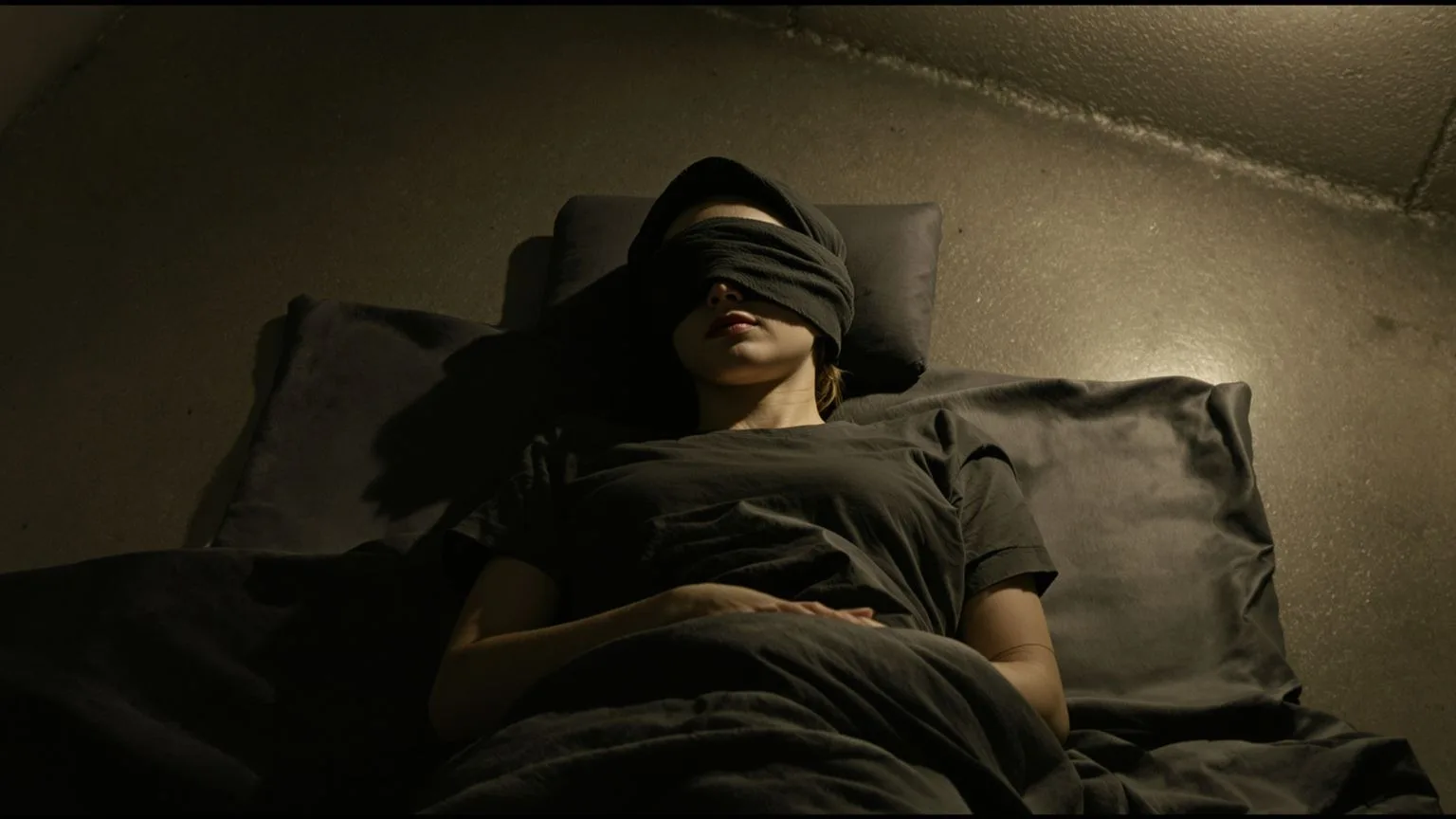
Set a timer for 10 minutes. Lie on your back. Place your hands beside your hips, palms facing down. Keep your body still. Close your eyes or cover them lightly. Let the floor carry your weight.
For one minute, do nothing except notice where your body meets support. Heels. Calves. Hips. Upper back. Back of head.
Quietly say: “I am not here to force anything.”
Now choose one location. Just one.
Throat tight. Chest heavy. Jaw locked. Stomach cold, twisted, or hollow.
Stay with that one area for 30–60 seconds and name only physical facts: tight, hot, dense, buzzing, numb, sharp at the edge.
If story rushes in, return to sensation. Story is welcome later. Right now, contact is enough.
After each short window, ask: “Am I still here?”
If yes, take one more round.
If no, open your eyes and orient to the room. Find three neutral anchors: the corner of the ceiling, the edge of a table, a shadow on the wall. Let breath move by itself.
This is tolerance work, not endurance work.
Ending early with choice is success.
One quiet truth to hold while you do this: safety is not the absence of feeling; safety is feeling without being abandoned.
When the timer ends, open your eyes slowly. Sit up when ready. Place both feet on the floor. Drink water. Write one line:
“In my body, I noticed ___.”
Integration can be that simple.
If you need something steady right now, Name the pattern — 3 free answers, no credit card — If this reached something in you, there’s a next step that doesn’t require figuring anything out first.
How to read your body when words don’t come

*Sometimes the body speaks first in geography — not language.*
When language disappears, start with location. Your body usually gives geography before explanation.
Throat: what you swallowed to keep the peace. Chest: grief, longing, loneliness, love with nowhere to land. Stomach: fear, betrayal, uncertainty. Shoulders: weight you were never meant to carry. Jaw: anger held back, words bitten off. Hands: helplessness, wanting to reach and freezing instead.
This is not diagnosis. This is contact.
You don’t need a perfect interpretation. You need enough closeness to the signal that it can move. Keep it concrete: where it is, warm or cool, heavy or light, still or pulsing, clear edge or diffuse edge.
Then ask one small question: what does this sensation seem to ask for?
Not what you must do immediately. Just what it asks for. Space. Boundary. Truth. Rest. Support.
If other this left you feeling lost, this is often the missing piece — an observer inside you that stays present while sensation rises and falls. Not detached. Not analyzing. Just present enough to notice, this is intense, and I am still here.
That observer grows through repetition, not force. You notice the exact moment your throat narrows before you agree to something you don’t want. You notice the heat in your jaw before old anger turns into silence. You notice your shoulders climbing toward your ears before the mental spiral starts.
These are small moments. But they change outcomes. They give you a few seconds of choice where there used to be none.
If emotion doesn’t come, that’s still movement. Numbness is protective intelligence. Meet it briefly and gently.
If emotion comes too fast, narrow the frame: one square inch of sensation, shorter rounds, orient sooner. Eyes closed or covered during contact. Eyes open for orientation. Palms down. Body still. Predictability helps the nervous system trust the process.
Over time, earlier noticing becomes possible. The jaw clench before escalation. The collapse before scrolling. The breath shortening before panic peaks. That is how safety becomes practical.
Related support: nervous system regulation in daily life, how to feel safe in your body again, what body awareness actually looks like.
After the practice: what changed, what softened, what remains true

*The shifts worth trusting are usually the quietest ones.*
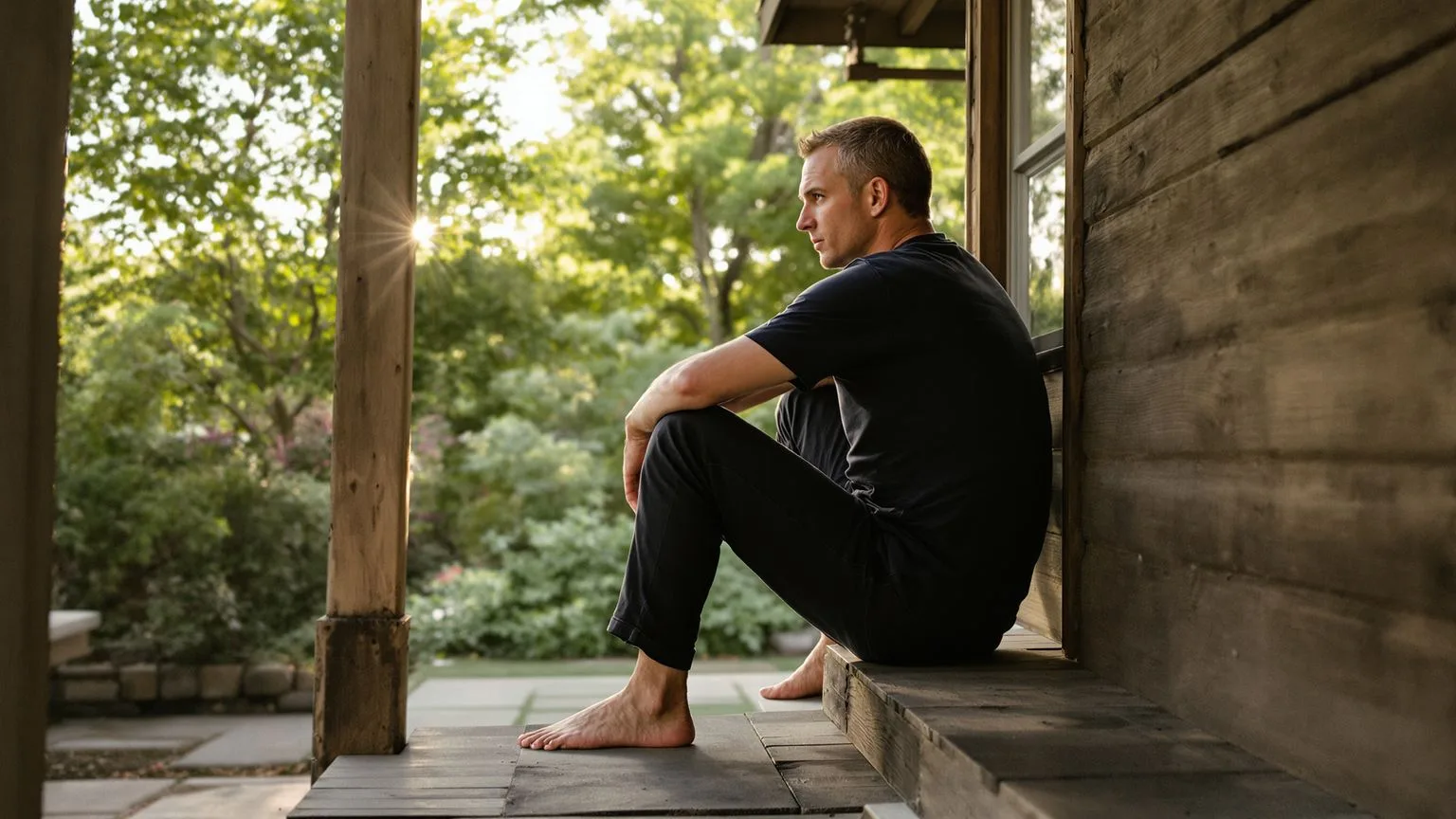
The first changes are often quiet. That’s why many people miss them.
What changed: you noticed activation earlier, and you had one moment of choice before the old pattern took over.
What softened: not always the pain itself, but the fight against it — less bracing, less self-attack, less fear of your own sensations.
What remains true: your nervous system is not your enemy. It is learning, through repetition, that it doesn’t have to treat every signal as an emergency.
This is the real aim of this experience: not dramatic catharsis, but reliable return. Less fear of your own body. More trust that you can feel and stay present at the same time.
If tonight felt subtle, that still counts. Subtle is often where trust begins.
Your next 24 hours: one clear path

*You don’t need a plan for the rest of your life. You need a plan for tomorrow.*
Keep it small enough to repeat.
- Do the 10-minute stillness practice once.
- Do one 30-second body check-in in the afternoon.
- Before bed, write: “Today my body felt ___ when ___ happened.”
If that feels like too much, cut it in half. Repeatable is stronger than intense.
If tomorrow night feels hard again, that doesn’t erase your progress. It means your body is asking for the same message again: I am here. I am listening. I am not forcing. This is why this work best when they are ordinary and repeatable, not dramatic. You’re teaching your system a new pattern through lived evidence, not willpower.
A guarded body is not a broken body. It is a loyal body waiting for proof of safety.
You don’t have to fight what your body carries. But you can meet it — with honesty, gentleness, and one true next step.
What often changes first is not the whole story, but the amount of force inside it. When what you’ve been holding is named honestly, your body usually stops spending so much energy on hiding, bracing, and pretending to be fine. That’s where clarity begins. You may notice a little less pressure in your chest. A little more room in your breathing. A little less panic around what this means about you. Those are not small things. They are signs that truth is starting to replace performance. And when truth returns, you can choose what actually restores you instead of repeating what only keeps you depleted.
You don’t have to push through this by force. You can meet it with honesty, with gentleness, and with one true next step. That is enough. It has always been enough.
When you’re ready, try Feeling.app free →
3 answers. 30 seconds each. No credit card. Yours to keep.
Frequently Asked Questions
Can beginners do somatic exercises to release trauma free without a therapist?
Yes — many people can start safely on their own when practice is brief, gentle, and focused on settling rather than catharsis. Work with one sensation at a time. Use short windows. Orient often. If you notice strong dissociation, flashbacks, or panic spikes, that’s your body asking for more support, and trained help is the safer next step.
Why do some free somatic practices make me feel worse?
Usually it means the dose was too high for where your body is right now. That’s overload, not failure. Lower the intensity. Shorten the duration. Add orientation between windows. And end before you lose your sense of choice. Your body will tell you when it’s ready for more.
Do I need shaking to release trauma from the body?
No. Shaking can happen naturally, and that’s fine. But it is not required, and it should never be forced. Stillness-based work can be deeply effective for building tolerance and restoring regulation — sometimes more so, because it keeps your sense of choice intact.
How quickly can I notice results?
Some people notice early changes within days — less jaw tension, easier settling at night, faster recovery after stress. Deeper change usually comes through steady repetition over weeks and months. The shifts that last tend to arrive quietly.
What if I feel numb during practice instead of emotional?
Numbness is often protective. It’s your body’s way of saying “not yet.” Start with neutral observations — pressure, temperature, shape, density. Building safety with numbness usually comes before access to deeper feeling. You’re not doing it wrong. You’re doing it in the right order.
How do I know if I’m regulating or avoiding?
Check your state after practice. Regulation usually leaves you a little more present, a little more connected to yourself. Avoidance usually leaves you foggier, flatter, or farther away. “More here” is a reliable compass. If you feel more here afterward, you’re on the right track.
### What is somatic exercises to release trauma free?
This is a body-level experience, not just a thought pattern. It often shows up as chest tightness, shallow breathing, or a sense of heaviness — your nervous system responding to something it hasn’t fully processed. It is not a flaw. It is protection that outlived its purpose.
### What causes somatic exercises to release trauma free?
The causes are rarely single events. This experience typically builds from accumulated stress, relational patterns, unprocessed grief, or early environments where certain feelings were not safe to express. The body adapts, then the adaptation becomes the pattern.