

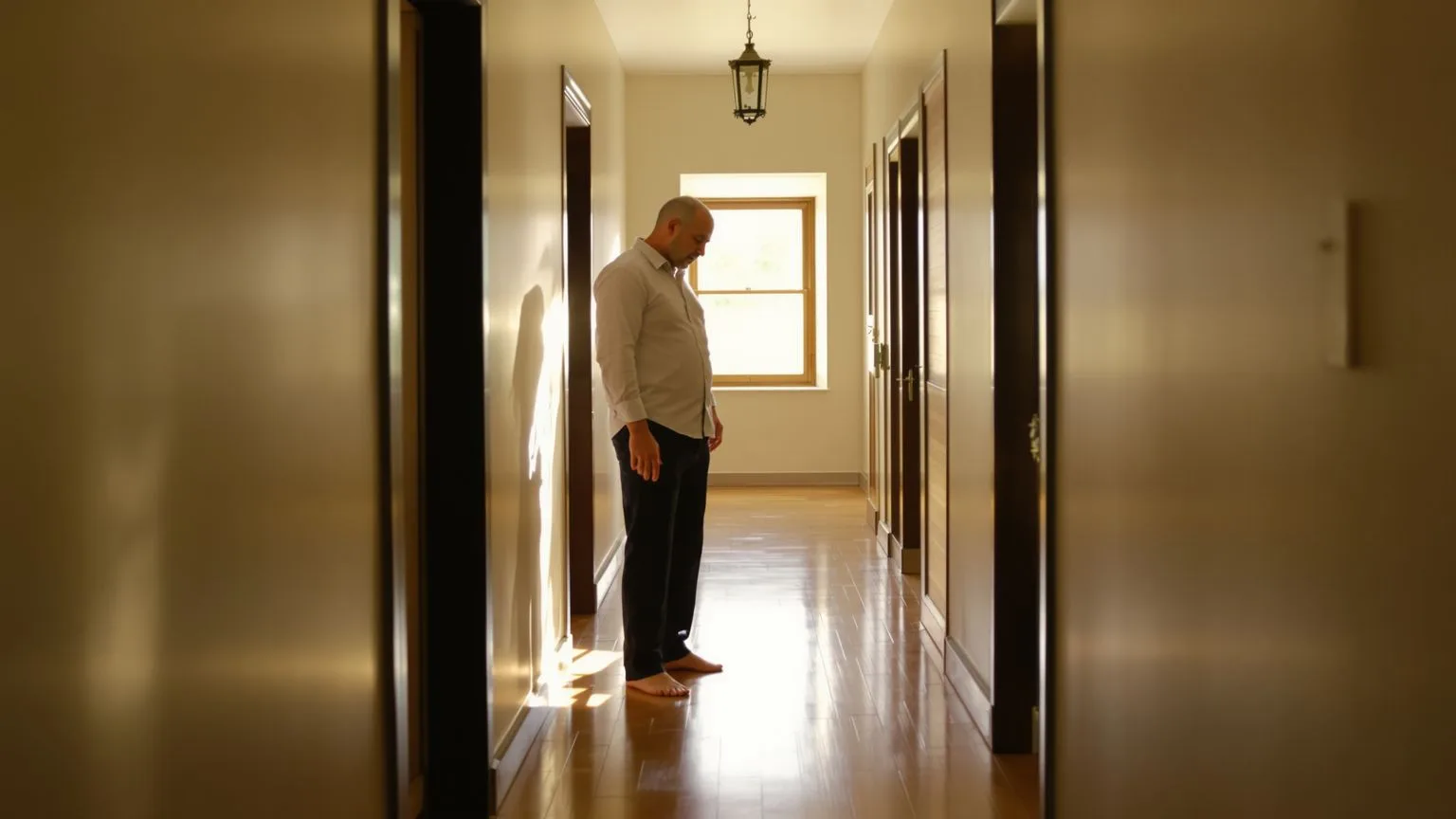
You searched emotional release massage because something happened on that table that went way past muscle soreness — and now you need something steady to hold onto. Maybe the practitioner pressed into one particular spot and your throat locked. Maybe your eyes filled before you even had a reason. Maybe you drove home in silence, told yourself you were fine, then felt strangely raw at night when the house got quiet.
If you felt embarrassed, you’re not alone. If you wondered whether you were overreacting, you’re not overreacting. If you left confused, that confusion makes perfect sense. By the end of this guide, the confusion should feel lighter and your next step should feel clear.
This is usually not your body failing. It’s your body dropping a layer of protection because, for a moment, it finally could.
What you suppress doesn’t disappear. It changes form.
Emotional release during massage often means your system found enough safety to stop bracing for a moment. What matters now isn’t how intense it felt during the session. What matters is what you do next — so that relief becomes direction instead of another wave you carry alone. After emotional release massage, the hours that follow often determine whether your body settles into ease or snaps back into its old guard.
If you want the wider foundation, start with my Permission to Feel guide. This piece is practical: what emotional release massage is, why it happens, what to do in the next 24 hours, and how to keep the shift from fading.
Why emotional release massage can make you cry when you came for muscle pain

*Sometimes the knot in your shoulder has been holding something your mind stopped counting long ago.*

Most of us were taught to control emotion, not to be with it. So you learned to hold.
Hold the breath.
Hold the jaw.
Hold the tears.
Hold the hard sentence.
After enough years, holding feels normal. You call it coping. Your body calls it load.
When people search for emotional release massage, the fear underneath is usually simple: Was that real, and should I be worried? Here’s a grounded answer: when protective tension drops, muted feeling can surface. Tears, trembling, heat, nausea, anger, fatigue, sighing, even sudden quiet — all common.
That mix can feel relieving and disorienting at the same time. One part of you says, “I’m fine.” Another part says, “Please don’t make me hide this again.”
Research and clinical observation support a two-way loop between prolonged stress and symptoms like muscle tension, sleep disruption, and mood strain. The American Psychological Association’s stress resources offer a solid overview. From a physiology angle, your autonomic nervous system constantly tracks safety and threat. Massage can shift that state. State shifts can uncover feeling.
Not every response means a major trauma release. Sometimes it’s grief. Sometimes fear. Sometimes the plain relief of unclenching after months of overholding. It doesn’t need to look dramatic to be real.
What your body is doing when emotion rises on the table

*Your body isn’t breaking down. It’s finally speaking without being interrupted.*

Pain patterns are rarely only structural or only emotional. They’re layered.
One layer is mechanical: posture, repetitive strain, old compensation habits. One layer is protective: bracing around conflict, shame, fear, over-responsibility. Most people carry both.
During emotional release massage, touch changes incoming sensory signals through skin, fascia, joints, and breath rhythm. If your system reads enough safety, guarding drops. When guarding drops, feeling gets louder. That’s why you can feel softer and more exposed in the very same minute.
You may notice it in body zones you already know:
Throat: pressure, a lump, swallowed words. Jaw: clenching, heat, the impulse to bite something back. Chest: ache, heaviness, sudden tears. Stomach: twist, drop, nausea, dread. Shoulders: collapse-level fatigue from carrying everyone else. Hands: urgency, helplessness, shaking.
None of this means you’re “too much.” It means your body is speaking clearly.
People often ask whether intensity means the session worked. A better measure is regulation over time: are you more honest with yourself, breathing a little easier, recovering faster from emotional spikes? For a balanced reference, the NCCIH overview on massage therapy is useful.
What helps most after a strong release is staying close to order: begin with sensation, then notice impulse, and only then move into story.
Sensation: what is happening in your body right now, before analysis.
Impulse: what the body wants to do — cry, hide, speak, go still.
Story: the explanation the mind builds.
Relief grows when sensation gets room before story takes over.
In the first 6–12 hours, you may feel thin-skinned. Noise can land sharper. Small comments can hit harder. You may feel tired and wired at the same time. This often reflects recalibration, not decline. Lower stimulation helps in this window: less conflict, less scrolling, fewer forced decisions.
In 24–72 hours, people tend to see one of three paths: deeper sleep and easier breath, emotional waves that come and settle, or a quick return of old bracing as daily life goes back to silence and overfunctioning. All are common. None mean failure.
If your environment keeps demanding urgency and emotional self-erasure, your body will re-brace quickly — even after a useful session. This response can open a door. Daily honesty keeps it open.
The cycle that makes the pain return: suppressing emotions between sessions
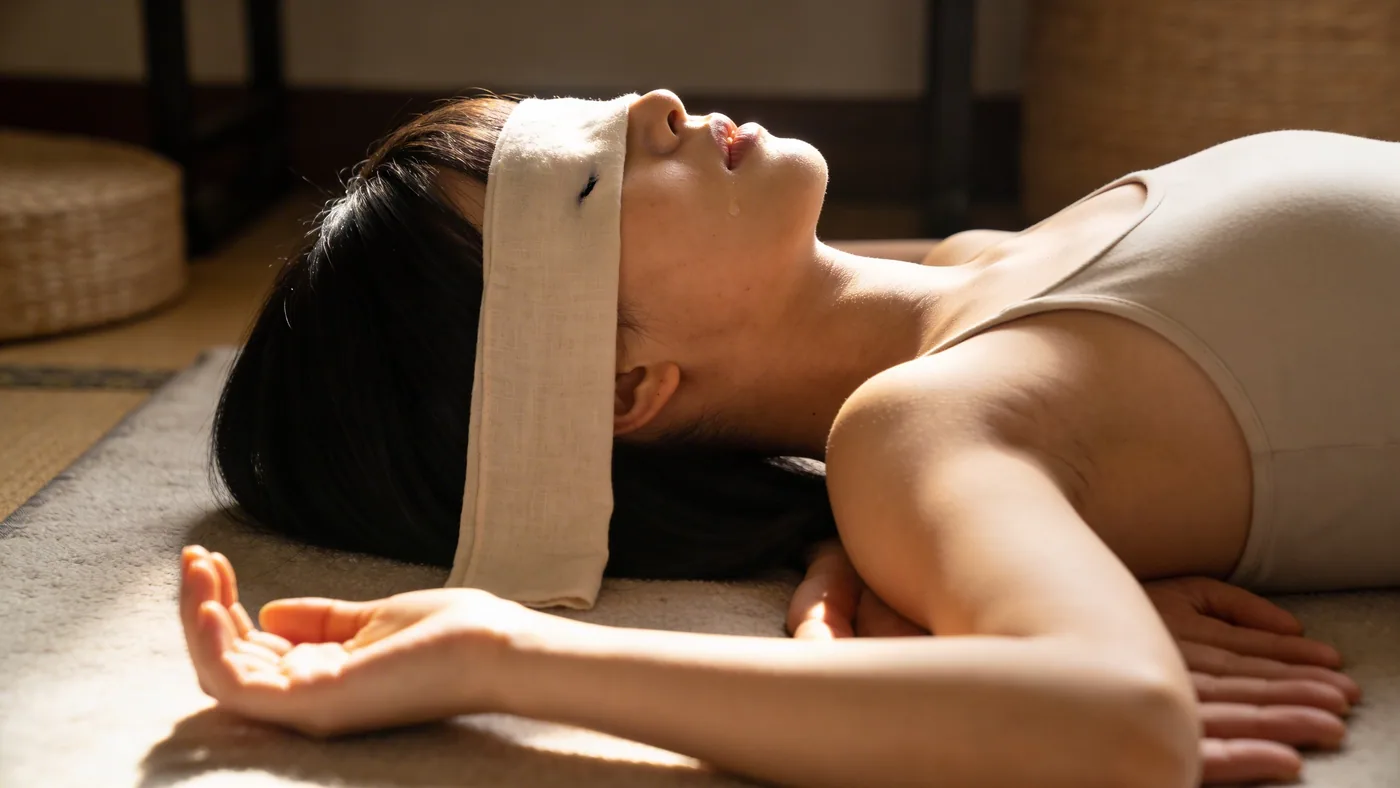
*You already know this pattern in your body. The relief fades. The tightness returns. And you wonder if anything actually changed.*

This is where most people get discouraged. A good session helps. Then the week resumes, and the old tension is back by Wednesday.
You stay polite.
You perform capable.
You swallow the sentence that needed to be said.
Your jaw locks. Your chest hardens. Sleep goes shallow.
That’s not weakness. That’s pattern memory.
If you learned early that feelings were dangerous, inconvenient, or selfish, you likely became highly skilled at appearing fine. That skill may protect connection on the surface while costing you breath, digestion, sleep, and calm underneath.
Being afraid to show emotions can look functional from the outside and feel like suffocating on the inside.
That’s why “its okay to not be okay” isn’t just comfort language. It’s a nervous system interrupt. Permission changes breathing. Naming lowers internal pressure. Honest emotional expression prevents buildup.
And emotional expression doesn’t mean emotional flooding. It can be proportionate and simple:
- “I’m overloaded right now.”
- “I need ten minutes.”
- “I care about this, and I can continue when I’m steadier.”
There’s also a quieter form of suppressing emotions: constant self-editing. You type “all good” while your stomach is in knots. You stay agreeable while your chest tightens. You finish tasks before noticing you’ve been braced for six straight hours. This is how bottling up feelings hides in plain sight.
The observer layer matters here. When you can notice, in real time, “my chest just tightened when I said yes,” you create a sliver of choice. That sliver is small. But it’s the beginning of change. Without it, old survival code runs the whole day.
Try watching for three moments where your body shifts before your words do:
- You agree too quickly and your throat goes dry.
- You laugh something off and your jaw hardens.
- You say “no problem” and your stomach drops.
Pause for ten seconds when you catch one. Keep your body still. Feel the exact location. Name one true sentence privately, even if you never say it out loud to anyone else.
“Part of me wants to disappear.”
“I’m angry and trying to look easy.”
“I need space before I answer.”
This isn’t dramatic work. It’s ordinary honesty done repeatedly. Over time, your body trusts you more — because you stop abandoning its signals in the name of being easy to manage.
Try this micro-interrupt in real time: notice one body cue, name one honest sentence privately, choose one low-drama boundary.
Example: “My jaw is hard. I am not okay. I need five minutes before I answer.”
Repeated enough, this lowers baseline tension. Your body no longer has to shout to be heard.
If this pattern feels familiar, continue with why you keep saying you’re fine when you’re not, how to stop hiding your feelings, and how to create emotional safety in daily life.
What often gets missed is the bridge between one session and the rest of your week. This is where what you carry either integrates or gets buried under habit. If you go straight from a vulnerable session into noise, urgency, and emotional self-editing, your body usually returns to the old armor by reflex.
Treat the first day after this pattern as a low-noise window. Keep conversations simple where possible. Delay nonessential conflict. Reduce background stimulation. Eat something steady. Hydrate. Take two short pauses during the day to check one body location and name one true sentence privately. Tiny consistency is more useful than one dramatic breakthrough.
Then set one practical anchor for the next 72 hours. Choose only one:
- a six-minute stillness check before bed,
- one honest boundary in a daily conversation,
- one short note in your phone with three words: location, feeling, need.
If another this experience is already booked, bring that note with you. Not a full story. Just pattern evidence from your own body. “Jaw, anger, space.” “Chest, grief, quiet.” “Stomach, fear, reassurance.” This keeps your progress grounded in direct signals instead of guesswork.
You’re not trying to force healing speed. You’re building continuity — so your system learns that truth will still be there tomorrow and doesn’t need to explode to be heard today.
If you need something steady right now, Write what you feel — 3 free answers, no sign-up — You don’t need the perfect words. One honest sentence is enough to start.
A 12-minute practice for when the wave comes later

*This is the part nobody prepares you for — when you’re alone, the house is quiet, and something unnamed rises.*

The hardest part is usually not on the table. It’s later. In the car. In the shower. In bed past midnight. The mind gets loud, and you need one clear step you can trust.
The 12-minute stillness practice
Permission (30 seconds)
Say quietly: “I do not need to fix this. I only need to stay with what is here.”
Entry — create safety (1 minute)
Lie down on a bed, mat, or floor. Keep your body still. Place your hands beside your hips, palms facing down. Cover your eyes with a soft cloth or keep them closed.
Body location — choose one place (2 minutes)
Scan once. Choose the strongest signal: throat, chest, stomach, jaw, shoulders, or hands. Pick one location only.
Tolerance — stay with sensation, not story (6 minutes)
Keep attention on that one spot. No fixing. No analyzing. No forced breathing.
If intensity rises too quickly, widen your attention: feel your back against the surface, both feet, and room temperature. Then return to the same spot for shorter intervals.
One quiet truth (2 minutes)
Without opening your eyes, say one line out loud:
“Right now, this feels like ___.”
Keep it concrete: “A fist in my throat.” “Heat in my jaw.” “Stone on my chest.”
Integration — close gently (1 minute)
Open your eyes slowly. Sit up slowly. Drink water. Place both feet on the floor. Do one ordinary action gently: wash a cup, fold a shirt, or stand by a window and feel one full breath.
If you want to stop around minute three, that’s normal. That edge is often where old suppression reappears. Stay kind. Stay simple. Continue.
If six minutes is your limit today, do six. Repetition matters more than intensity.
What changes after practice, what softens, and what remains true
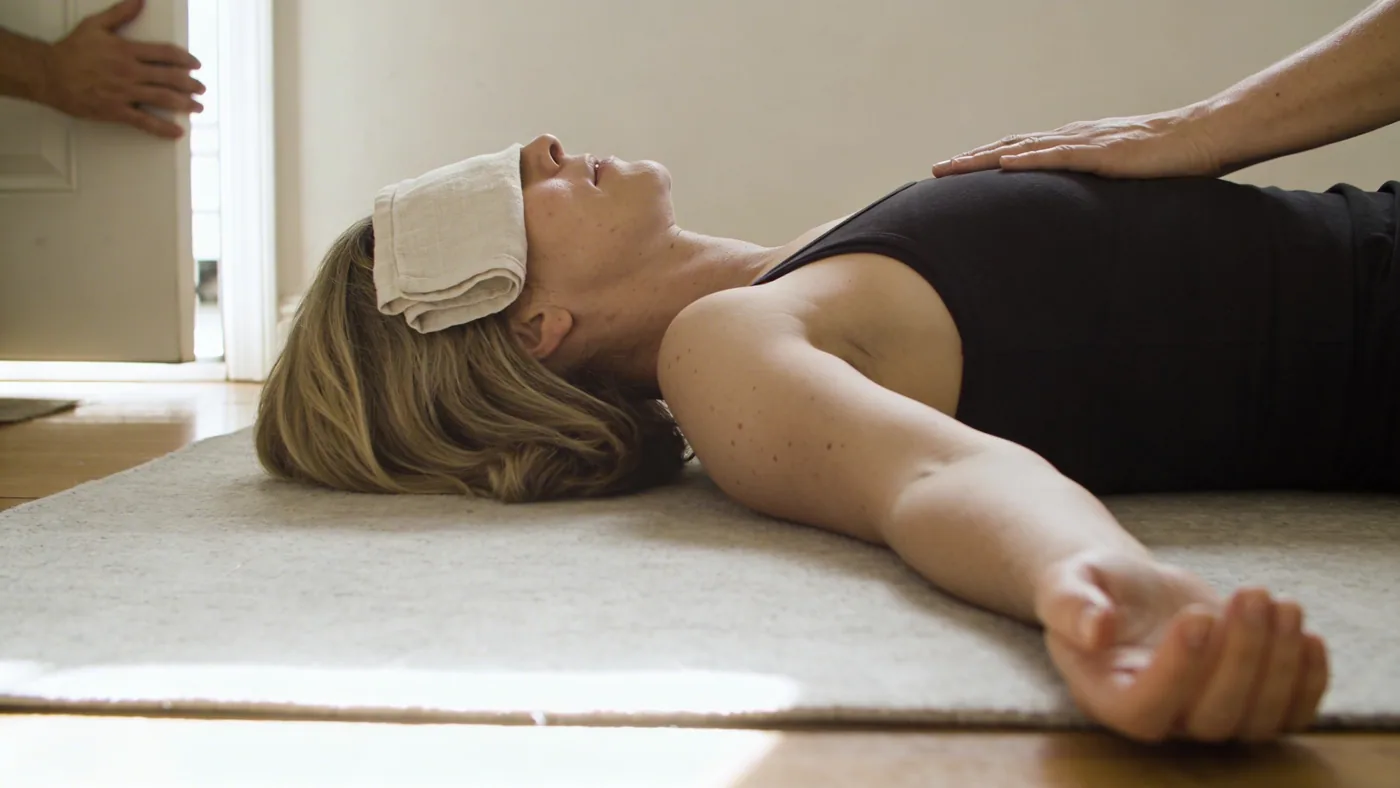
*The shift you’re looking for isn’t loud. It’s the moment you stop bracing against yourself.*

What changes first is often small but unmistakable: breath drops lower, your jaw unlocks one notch, chest pressure shifts from “all of me” to “one part I can stay with.”
What softens is usually the fear of your own feeling. The wave may still come. But it feels less like an attack and more like information your body has been waiting for you to hear.
What remains true is this: you don’t need a dramatic breakthrough. You need repeatable honesty in ordinary moments. One body location. One true sentence. One grounded action after.
Tonight, keep it plain. Lie down for six minutes with palms down and eyes closed. Choose the loudest body location. Speak one honest line out loud before sleep. Then write three words in your phone or on paper: location, feeling, need.
“Chest, grief, quiet.”
“Jaw, anger, space.”
“Stomach, fear, reassurance.”
Tomorrow, repeat the same check at the same time — even if the feeling is smaller. Consistency is the next step that makes this real. When you show up twice, your body gets evidence that you’re listening now, not only during a hard moment.
The point of this pattern is not a dramatic session you have to chase again. It’s this quieter shift: you stop abandoning yourself after the wave. What you suppress doesn’t disappear. It changes form — and what you let yourself feel in small honest moments no longer needs to live as pain.
When you’re ready, try Feeling.app free →
3 answers. 30 seconds each. No credit card. Yours to keep.
Frequently Asked Questions
Why do I cry during massage even when I wasn’t thinking about anything sad?
Because emotional release doesn’t need a conscious story first. Touch, pressure, and a felt sense of safety can lower your guarding — and held emotion surfaces as tears, heat, trembling, or fatigue. This usually means something moved. It doesn’t mean something is wrong.
Is emotional release massage actually real, or am I imagining it?
It’s real. It’s widely reported, and it aligns with what’s known about stress physiology and nervous system state shifts. Expectation can influence intensity, yes. But it doesn’t cancel the genuine changes in your breath, your tension, and your emotional state. You’re not making it up.
Why does the same pain come back after a powerful session?
One session can open a pattern. But daily suppressing emotions can rebuild that pattern quickly. If life goes back to silence, overfunctioning, and bottling up feelings, protective bracing often returns. The session opened a door. What you do between sessions keeps it open.
What should I do right after an emotional release massage?
Go slowly. Drink water. Reduce stimulation for a few hours. Later the same day, do a brief body check-in — name one sensation and one feeling in plain language, without overanalyzing. Keep the rest of the evening simple.
I’m afraid to show emotions. How do I start without overwhelming myself?
Start small. Start private. Use a contained 6–12 minute stillness practice with palms down and eyes covered or closed, focused on one body area. Then share one honest sentence with someone safe. Gradual honesty builds capacity far better than forced disclosure. You get to go at your own pace.
Is it okay if I feel numb instead of emotional release?
Yes. Numbness is also protective. It’s part of the same process, not proof of failure. Gentle and consistent body attention often helps numbness shift toward clearer sensation over time. If numb is where you are, that’s a valid starting point.
### What is emotional release massage?
This experience is a body-level experience, not just a thought pattern. It often shows up as chest tightness, shallow breathing, or a sense of heaviness — your nervous system responding to something it hasn’t fully processed. It is not a flaw. It is protection that outlived its purpose.
### What causes emotional release massage?
The causes are rarely single events. This response typically builds from accumulated stress, relational patterns, unprocessed grief, or early environments where certain feelings were not safe to express. The body adapts, then the adaptation becomes the pattern.